Can Bitcoin Save the Crypto Bull Run With This Weekly Close?
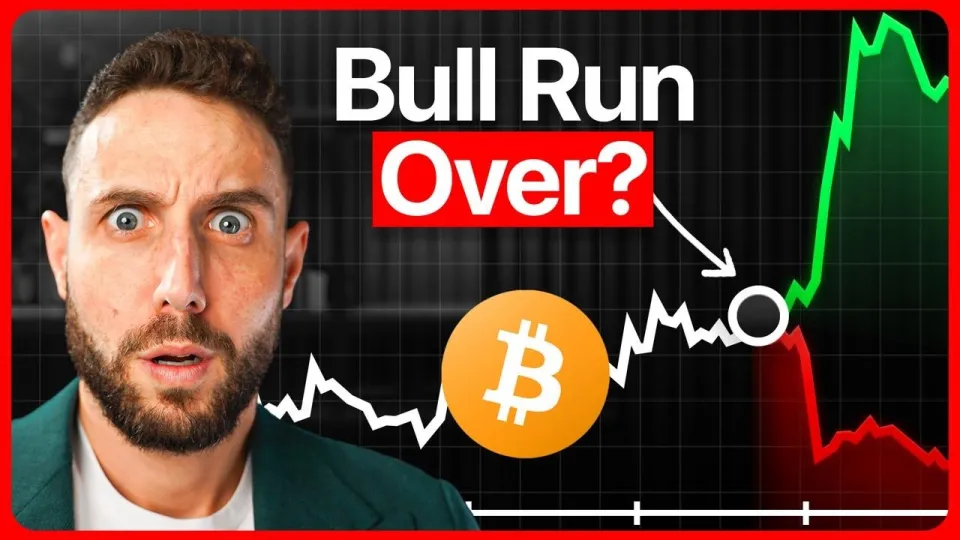
Video: Bitcoin Has 2 DAYS to Save the Crypto Bull Run
You can order the same kind of articles for your own video to boost it on YouTube and Google. Just message the Telegram bot @sat_sit_bot. The bot writes and publishes the articles itself (with your YouTube video embedded) on popular topical websites (no ads). Your first 50 articles are free.
· based on the channel EllioTrades
Bitcoin's next move hinges on whether the weekly candle closes above its support zone; if it does, the crypto bull run stays intact and the correction looks like a normal shakeout, while a close below it opens the door to a deeper retracement toward the 90,000s and then the mid-80,000s. That single close is the line between a buyable dip and a trend change, and it is the framework EllioTrades uses for both BTC and altcoins. Traders who want to position around the outcome can use the Kalshi market linked by EllioTrades to express a view on where price lands.
Why the weekly close matters more than any single day
A weekly close is the price that institutional and systematic traders actually mark their books against, which is why it carries more weight than an intraday wick. Bitcoin can sweep a low, liquidate leverage and snap back within hours without changing anything on the higher timeframe; a weekly candle that finishes under support tells a different story, because it means sellers held control through five days of trading rather than one session of panic.
That is the logic behind the two-day framing: with the week running out, there is very little time left for buyers to reclaim the level. Three outcomes matter:
- A close back above the support zone, ideally with a long lower wick, keeps the bullish structure and turns the dip into an entry.
- A close inside the zone leaves the market undecided and favors waiting for the following week's confirmation.
- A close clearly below the zone confirms the breakdown and shifts the plan toward lower targets and defensive positioning.
The levels that define the plan
On the downside, the first area to watch is the range low that has held through the recent pullback; losing it on a weekly basis puts the 90,000s in play, and a failure there exposes the mid-80,000s. On the upside, reclaiming the 100,000 area is the confirmation signal that the correction is over and that risk can be added again. Between those two edges, price is simply chopping, and chop is where leveraged traders get hurt.
A practical way to use these levels without guessing:
- Do not chase a move into resistance; wait for a retest of the broken level.
- Size positions so that a stop below the range low costs a fixed, small percentage of the account.
- Treat a weekly close beyond a level as the trigger, not an intraday touch.
- Keep dry powder for the scenario where price sweeps the low and reclaims it in the same candle.
What a hold would mean for altcoins
If Bitcoin holds support, the altcoin rotation is the second leg of the trade, and the coins that held their own ranges during the BTC pullback are the first candidates. EllioTrades' stated approach is to build a watchlist now and buy only on confirmation, rather than pre-emptively loading up on the hope that support survives. Relative strength is the filter: an altcoin making higher lows while Bitcoin made lower lows is showing buyers, and those are the names that tend to run first when BTC stabilizes.
Risk management matters more here than in BTC, because altcoins typically draw down two to three times as much in a broad flush. A reasonable structure is to allocate in tranches, keep the largest part of the position for after the weekly close confirms, and avoid illiquid names where a stop cannot be filled at the intended price.
The bear case traders keep raising
Several viewers pushed back hard on the idea of hoping for a cheaper entry, arguing that a confirmed bull with higher prices is a better outcome than a deep discount bought with lower conviction. That is a fair point about probabilities: every week spent below support reduces the odds that the uptrend resumes on schedule. The counterargument is that corrections inside a bull market are normal, and buying strength after a reclaim has historically been more reliable than catching a falling knife.
The other recurring concern is liquidity. Market makers and desks are less active over the weekend, so moves during thin hours frequently reverse on Monday. A weekend breakdown is therefore weaker evidence than a Friday close, and the plan should treat it that way.
Questions and doubts from the audience
The most common pushback is about what counts as a buying opportunity. The answer is a defined zone, not a vibe: a weekly close above support, followed by a higher low, is the trigger, and entries are scaled between the reclaim level and the prior range high rather than placed at a single price. If Bitcoin reclaims 100,000 and then pulls back to the 90,000s, that pullback is a buy only if the higher-timeframe structure is still intact.
A second theme is the fear that a short bear market would produce a weak next bull run. That is a legitimate macro argument, but it is a months-long thesis, not a trade signal, and it does not change where the stop belongs this week. Others worry that Bitcoin dominance will keep rising and push altcoins to lower lows; that scenario is exactly why altcoin exposure should wait for BTC confirmation instead of front-running it. Some also flagged index and treasury-company decisions as bigger catalysts than any single candle, which is a reminder to keep event risk on the calendar alongside the technical levels.
How to position around the close
Positioning comes down to three decisions made in advance: how much to risk if support fails, how much to add if it holds, and what invalidates each scenario. Writing those down before the candle closes removes the temptation to improvise in thin liquidity. If support holds, the plan is to add in tranches and let the reclaim of 100,000 confirm the trend; if it breaks, the plan is to stand aside, keep the watchlist warm, and wait for the mid-80,000s or a decisive reclaim before committing capital.
EllioTrades lays out this exact framework in the video breakdown, including the altcoin names on the buy list if support holds. For traders who want to act on the outcome rather than watch it, the Kalshi sign-up page from EllioTrades is the place to start.
Tools and links from the breakdown
- Kalshi, trade $50 and get $50: https://kalshi.com/p/elliotrades
- Liquid, 10% off trading fees: https://liquid.trade/r/ellio
- WEEX, deposit $100 and unlock up to $4,000 in bonuses: https://www.weex.com/events/promo/elliotrades-deposit-trade?vipCode=wubo&qrType=activity
- fomo, follow the public trading journey: https://fomo.family/r/elliotrades
- X: https://x.com/elliotrades
The bottom line
Bitcoin's weekly close is the decision point: hold support and the bull run survives, with 100,000 as the confirmation level and altcoins as the second leg; lose it and the 90,000s followed by the mid-80,000s become the downside map. The plan is binary and written in advance, which is the only way to trade a thin weekend without reacting to noise. EllioTrades is the author of the video breakdown this framework comes from, and the channel's stated approach is to buy confirmation rather than hope.
Key takeaways
- The weekly close is the decisive trigger: holding support keeps the bull case alive, losing it opens a deeper retracement.
- EllioTrades frames the setup as a two-day window and lays out a plan for BTC plus altcoin buy zones if support holds.
- A break of the range low would put the 90,000s and then the mid-80,000s back in play as downside targets.
- Reclaiming the 100,000 area is the confirmation signal that shifts the plan from defense to adding risk.
- Weekend liquidity is thin because market makers step back, so weekend moves often produce false breaks.
Questions & answers
What counts as a buying opportunity if Bitcoin holds support?
A weekly close back above the support zone followed by a higher low is the trigger, with entries scaled between the reclaim level and the prior range high. A pullback after reclaiming 100,000 is buyable only while the higher-timeframe structure remains intact. Buying before the close is a bet on the outcome, not a confirmation.
Is a weekend breakdown below support a real signal?
Usually not on its own. Market makers and desks are less active over the weekend, so thin liquidity produces moves that often reverse when full participation returns. The Friday close and the weekly candle carry far more weight than a Saturday wick through the range low.
Why not just wait for much lower prices to buy crypto?
Waiting for a deep discount lowers the probability that the uptrend is still intact, because every week below support weakens the bull case. Buying strength after a confirmed reclaim has historically been more reliable than catching a falling knife, even though the entry price is higher.
How should altcoins be handled if Bitcoin's support fails?
Altcoins typically draw down two to three times as much as BTC in a broad flush, so exposure should be reduced or hedged until Bitcoin confirms. Keep a watchlist of names showing relative strength, but wait for a BTC reclaim before committing size, and avoid illiquid coins where stops cannot fill.
Source: Bitcoin Has 2 DAYS to Save the Crypto Bull Run · Markdown version